
If you’ve ever tried to fix acne, you’ve probably been told to “do more.”
More products. More steps. More treatments.
But in reality, acne-prone skin often responds better to the opposite: simplicity.
If you haven’t already, it helps to understand how different triggers and habits contribute to breakouts — because your routine should support your skin, not fight against it.
This guide breaks things down into something practical: a skincare routine for acne-prone skin that you can actually stick to, without overwhelming your skin.
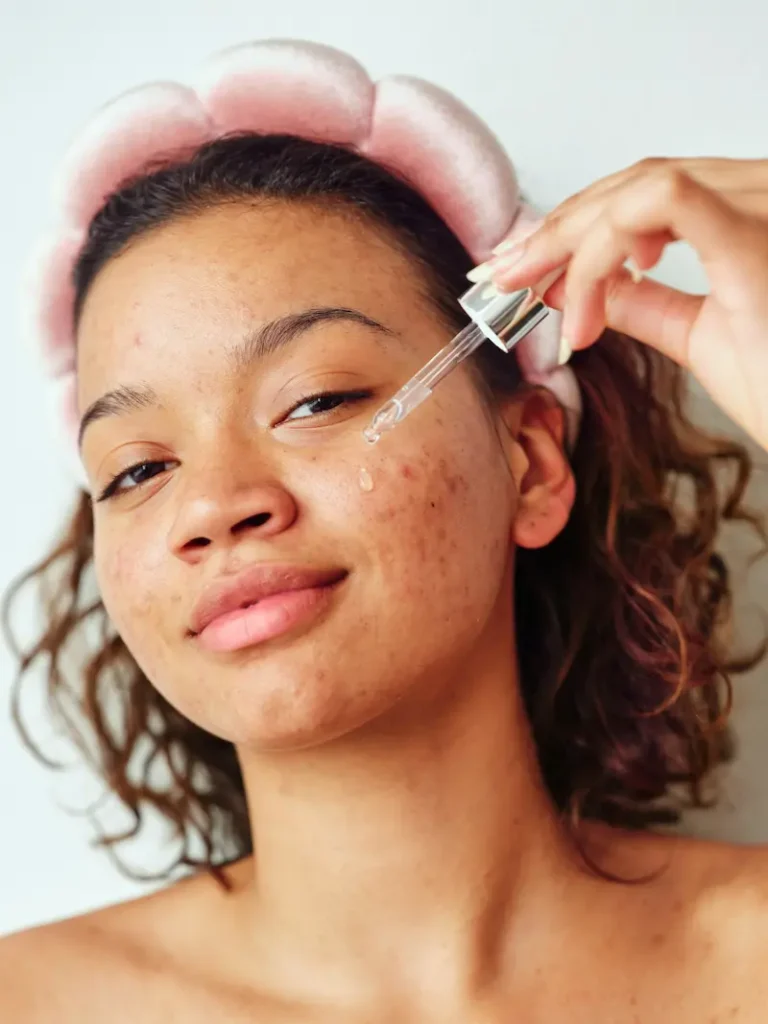
Why a Simple Skincare Routine Works Better for Acne-Prone Skin
One of the biggest mistakes people make is overcomplicating their routine.
Layering too many products, switching constantly, or trying to “fix” acne quickly can disrupt your skin barrier — which often makes breakouts worse.
Your skin doesn’t improve from intensity.
It improves from consistency.
A simple routine helps you:
- reduce irritation
- avoid unnecessary buildup
- understand what’s actually working
And most importantly, it gives your skin the stability it needs to recover.
Step 1: Gentle Cleansing (Twice a Day)
Cleansing is where everything starts — but more isn’t better.
Washing your face morning and night helps remove:
- excess oil
- dirt and sweat
- buildup from products
But harsh cleansers or over-washing can strip your skin, leading to more oil production and irritation.
A gentle cleanser keeps things balanced without disrupting your skin barrier.
If your skin feels tight or dry after cleansing, it’s a sign you’re doing too much.
Step 2: Keep Your Routine Minimal
When your skin is breaking out, it’s tempting to try everything at once.
But more products = more variables.
A well-structured skincare routine for acne-prone skin doesn’t need to be complicated. A simple routine should focus on just a few essentials:
- a cleanser
- a lightweight, non-comedogenic moisturizer
- a targeted treatment (only if needed)
That’s it.
Adding too many steps increases the chances of irritation, clogged pores, or reactions — especially if you’re mixing active ingredients.
Step 3: Moisturize — Even If You Have Oily Skin
Skipping moisturizer is one of the most common mistakes.
It might feel counterintuitive, but dehydration can actually make your skin produce more oil — which can lead to more breakouts.
A lightweight moisturizer helps:
- maintain balance
- support your skin barrier
- reduce irritation from treatments
The key is choosing something that feels light and breathable on your skin.
Step 4: Be Careful with Treatments
Acne treatments can be helpful — but only when used correctly.
Ingredients like salicylic acid or benzoyl peroxide can reduce breakouts, but using too many at once or applying them too frequently can irritate your skin.
This often leads to:
- redness
- dryness
- more breakouts over time
Start slowly.
Use one treatment at a time.
And give your skin time to adjust before adding anything new.
Step 5: Sun Protection (Often Overlooked)
If you’re dealing with acne, sunscreen isn’t optional.
Sun exposure can:
- worsen inflammation
- slow down healing
- increase the risk of acne scars and dark spots
A lightweight, non-comedogenic sunscreen helps protect your skin without clogging pores.
It also supports long-term skin health — something that’s often overlooked when focusing only on breakouts.
The Habits That Matter Just as Much as Your Routine
Your skincare routine is only part of the picture.
Many breakouts are influenced by daily habits that don’t seem directly related to skincare.
For example:
- touching your face throughout the day
- inconsistent routines
- stress and lack of sleep
Even small behaviors can add up over time.
If you tend to rest your hand on your face or touch your skin without realizing it, this alone can contribute to breakouts — often more than people expect.
Some triggers are even less obvious — from what you drink to the products you use daily.
Consistency Over Perfection
One of the biggest shifts you can make is letting go of perfection.
You don’t need the “perfect” routine.
You need a routine you can follow consistently.
Switching products every few days or constantly adjusting your routine makes it harder to see real results — and often keeps your skin in a cycle of irritation.
Consistency builds results.
Not intensity.
When Your Routine Isn’t the Problem
Sometimes, even when your routine is simple and consistent, breakouts still happen.
That’s because acne isn’t caused by skincare alone.
Diet, stress, lifestyle habits, and even certain ingredients can all play a role.
If your routine feels “right” but your skin isn’t improving, it may be worth looking beyond skincare — especially at the less obvious triggers that can influence your skin daily.
A Routine That Works With Your Skin — Not Against It
The goal of any skincare routine for acne-prone skin isn’t to fight your skin.
It’s to support it.
That means:
- keeping things simple
- avoiding unnecessary irritation
- staying consistent
Over time, this approach creates a more stable environment for your skin — and that’s what leads to real, visible improvement.
Final Thoughts
Acne-prone skin doesn’t need more complexity.
It needs balance.
A simple routine, combined with consistent habits, will always outperform an aggressive, constantly changing approach.
And while no routine can guarantee perfect skin, how you feel about your skin matters just as much as how you care for it.